When Rest Feels Uncomfortable: Why High Performers Can't Switch Off
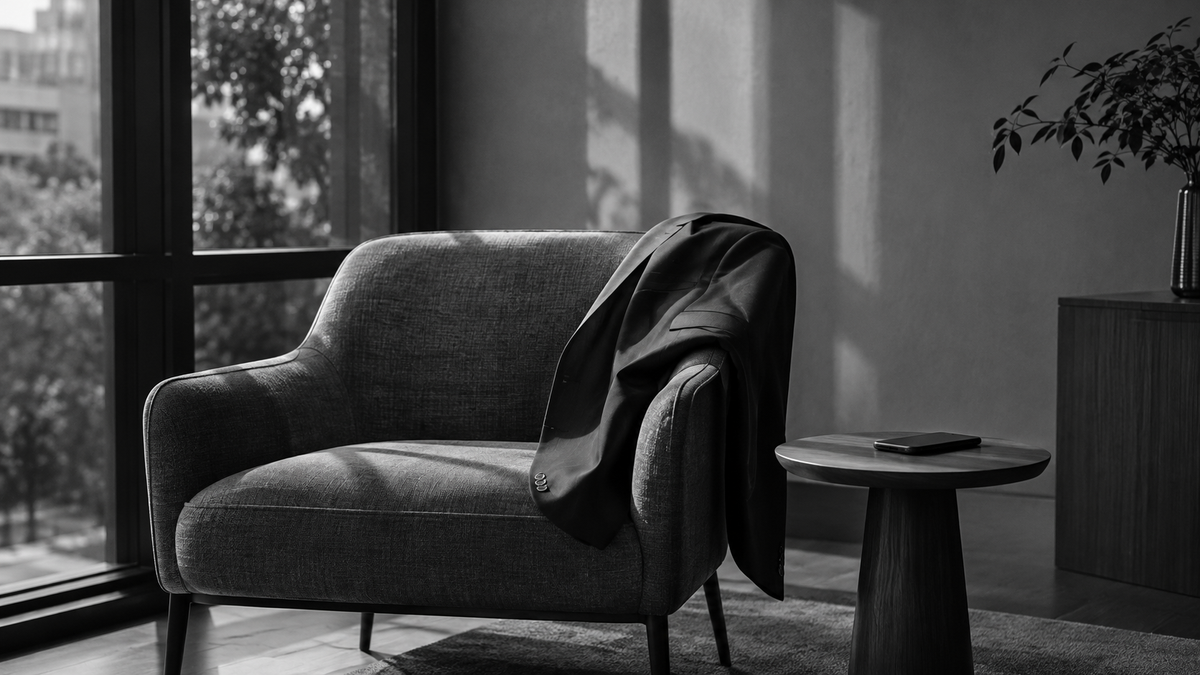
It's Saturday morning. No meetings. No deadlines. Nobody waiting for an answer.
Ten minutes into sitting on the sofa, you reach for your phone.
Perhaps there's an email you missed. Something you could prepare for Monday. One small task you could finish before lunch.
You finally have time to rest. So why does doing nothing feel harder than working?
For some leaders, that feeling is familiar. And it raises a question worth asking: When did being busy become more comfortable than being still?
The Workday Ends. Your Thoughts Don't.
You close your laptop, but your mind keeps going.
You replay a difficult conversation. Wonder whether you made the right call. Mentally rewrite a message you sent hours ago.
Researchers have a name for the ability to step away from work mentally: psychological detachment. It doesn't mean you stop caring. It means your job doesn't occupy every quiet moment.
A 2023 systematic review examined 159 studies on what helps and hinders that detachment. Heavy demands and blurred boundaries between work and personal life are part of the picture.
A 2026 meta-analysis found that unfinished tasks were associated with more work-related thoughts during time off, especially rumination. That's a relationship, not proof that unfinished tasks cause every restless evening.
But it explains why a closed laptop doesn't always feel like a finished day.
When Your Job Becomes Your Identity
Here's a different question. When someone asks who you are, how quickly do you mention what you do?
There's nothing wrong with being proud of your work. Responsibility and ambition can give life meaning.
The difficulty may begin when feeling valuable becomes tied to being useful, needed, or productive.
An empty afternoon can then feel oddly uncomfortable. Not because something urgent needs doing, but because you're no longer doing the thing that usually tells you you're doing well.
If I'm not achieving anything, am I still enough?
That isn't the hidden truth behind every leader's struggle to rest. Some people face unrealistic workloads, job insecurity, or genuine pressure to remain available.
Still, it's a question worth sitting with: Do you choose to work hard because it matters to you, or does stopping sometimes feel like letting yourself down?
Your Body Hasn't Read Your Calendar
Stress isn't only something you think about. You may feel it in your breathing, your jaw, your shoulders, or your heartbeat.
The sympathetic branch of the autonomic nervous system helps mobilize energy when you face demands. Parasympathetic activity supports functions involved in recovery and regulation.
They don't work as two switches, with one always on and the other off. Both are involved in a constantly changing balance of bodily processes.
So when the last meeting ends, your physical tension may not disappear immediately.
You sit down, but your shoulders remain tight. Your thoughts keep moving. You get up again to find something useful to do.
That doesn't prove you're trapped in "fight-or-flight" mode. It simply shows that being free of appointments and feeling settled are two different things.
What Breathing Can Actually Do
Your breath is unusual: it runs automatically, but you can also change it deliberately.
Slow, comfortable breathing can influence heart rate and other cardiovascular responses connected to autonomic regulation.
A 2024 meta-analysis examined 31 studies involving 1,133 people. Slow-paced breathing produced short-term improvements in measures including heart rate, blood pressure, and heart rate variability.
The findings for negative emotions and perceived stress were less conclusive. Long-term effects also need more research.
So breathing is not a way to erase chronic stress in three minutes. Nor can it compensate for a workplace that expects you to be available around the clock.
But it may give you a practical way to notice your state and gently influence it.
Three Minutes Between Work and Home
Try this after your final meeting, before you leave your desk, or shortly after getting home.
The aim isn't to force relaxation. It's to mark a transition.
Here's how:
- Sit comfortably, with both feet on the floor. Let your jaw and shoulders soften.
- Breathe gently through your nose for about four seconds. Don't take an oversized breath.
- Exhale slowly and comfortably for about six seconds. No pushing or straining.
- Continue for three minutes. If the rhythm feels unnatural, shorten it or breathe normally.
Stop if you feel dizzy or uncomfortable.
Then ask yourself:
What am I still carrying from today that can stay at work?
Perhaps you feel calmer. Perhaps you notice how restless you are. Perhaps nothing changes yet.
None of those responses means you've done it wrong.
You Are More Than the Person Who Delivers
It's easy to make rest conditional.
I'll relax when the inbox is empty. When the project is done. When everyone is satisfied.
But leadership rarely offers a clean finish line. There's always another decision, request, or problem waiting somewhere.
The answer isn't to stop caring about your work. It's to notice when your work has become the only place you allow yourself to feel worthwhile.
Rest doesn't have to earn its place by making you more productive tomorrow.
Sometimes it can simply be rest.
And sometimes the most honest moment of the day is the one in which nothing needs to be solved, and you let yourself be there anyway.
Good self-leadership isn't only about knowing when to act. It's also about knowing when you can stop.
Scientific References
- Agolli & Holtz (2023): Facilitating Detachment From Work: A Systematic Review, Evidence-Based Recommendations, and Guide for Future Research. Journal of Occupational Health Psychology.
- Wendsche, Weigelt & Syrek (2026): Unfinished Work Tasks and Work-Related Thoughts During Off-Job Time: Meta-Analysis of the Zeigarnik Effect in a Work-Recovery Context. Anxiety, Stress, & Coping.
- Shao, Man & Lee (2024): The Effect of Slow-Paced Breathing on Cardiovascular and Emotion Functions: A Meta-Analysis and Systematic Review. Mindfulness.